Spray foam insulation isn't a red flag on its own — installed correctly, it performs well. But because it's sprayed directly onto roof decking and framing, it can also hide problems (or a poor install) from a standard walkthrough. Here's a practical checklist if you're buying a home that has it.
Get the installer's name, the install date, and — if available — any documentation from the original job (invoice, spec sheet, warranty). This gives an independent inspector a baseline to compare against.
A general home inspector will typically note the presence and general condition of visible insulation, but most are not equipped to test thickness, adhesion, or moisture behind an existing spray foam application — and foam-covered roof decking can't be visually inspected for rot the way exposed framing can.
During a walkthrough, note any persistent chemical odor, visibly uneven coverage, soft or spongy texture where you can reach it, or staining near foam-covered areas. None of these are conclusive, but they're reasons to request a closer look.
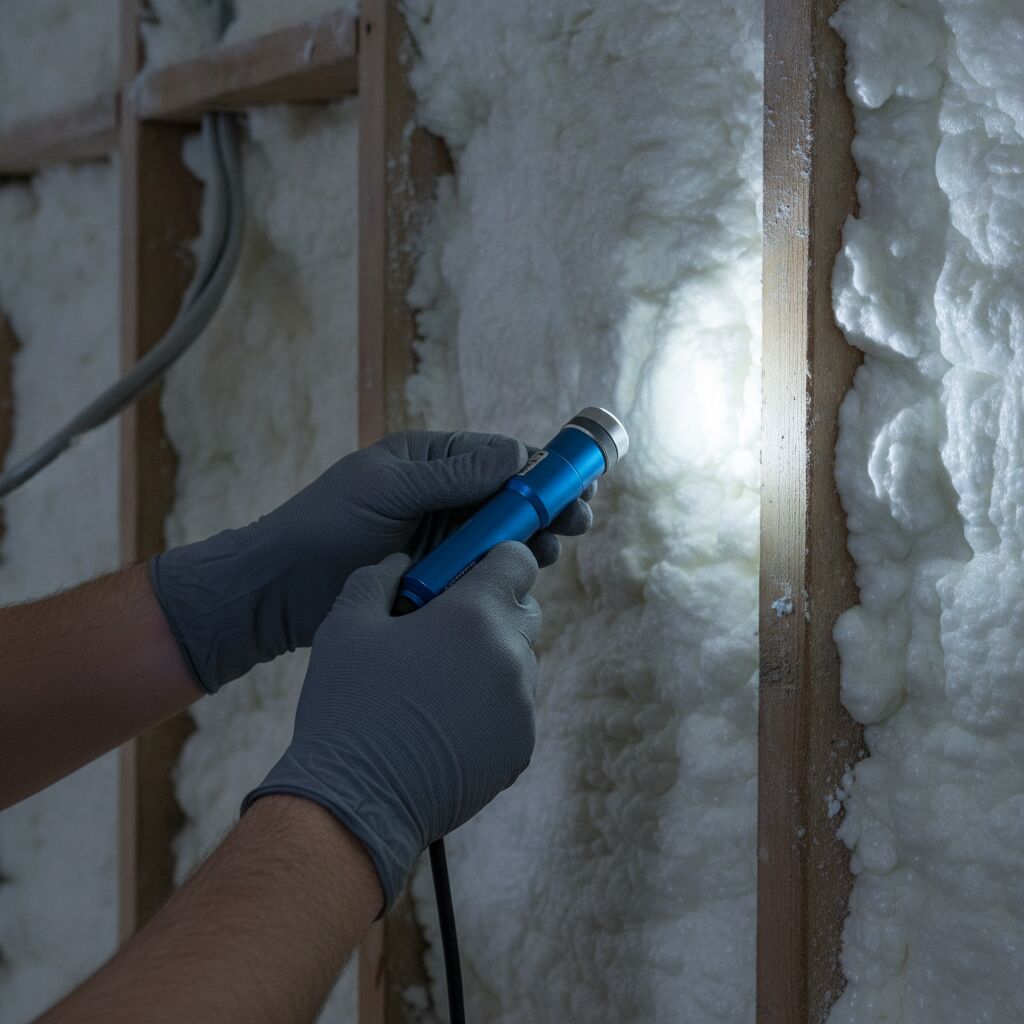
If spray foam is present — especially in an attic, roofline, or crawlspace — a dedicated inspection adds thickness sampling, adhesion checks, and moisture readings that a general home inspection doesn't include. This is worth doing before your inspection contingency expires, not after.
A documented report — not just a verbal opinion — gives you something concrete to bring into negotiations, share with your realtor, or simply keep for your own records after closing.
Planning to buy a home with spray foam insulation? Spray Foam Testing Services offers independent pre-purchase inspections — reach out with your timeline and we'll help you schedule before your contingency window closes.
No installation. No referrals. No upselling.